Showing posts with label environmental education. Show all posts

Monday, January 22, 2018

Washington Agriculture


As the new Americorps Intern at Cascadia Conservation District, I have taken over teaching our environmental education programs, Wheat Week and the Water on Wheels, in the schools throughout Chelan, Douglas and Okanogan Counties. I really enjoy being able to get out and teach these lessons, not only because they are educating students about crucial environmental concepts, but also because they are teaching the students about farming. Farming is something we have become further removed from as the number of small family farms have decreased across the country.
                However there is hope! In Washington, 89% of our farms are small farms. This is much higher than the national average where only 49% of farms are considered small farms. This impressive figure helps to bridge the gap between the production of food, fuels, and fibers and the consumer. Being aware of what goes into the production and the hard work, dedication, and care put in by farmers is extremely important. This is one of the many concepts I try to teach and convey to my students. It is not just going to the grocery store. I try to get them to think on a larger scale.
     Between crops and livestock, Washington agricultural products were valued around $10.7 billion for 2015. That figure represents only the products that are grown and raised here in Washington, it does not include the food processing industry that is also crucial, contributing more than $20 billion to the economy. Apples are a huge part of the agriculture industry here. Washington produces 70% of the apples in the USA. Here in Wenatchee, the apple capital of the world, we have rich volcanic soils combined with irrigation fueled by the Columbia River basin, providing quality growing conditions for ample yields.
                Farmers are not just growing the food that will end up on our tables, they are growing the fuel we use and the fibers we need. Farmers are crucial to our society and we are lucky to have as many amazing farmers as we do in our state. We depend on the agricultural industry not only to provide us with the food, fibers, and fuel for our day to day lives but we also rely on them for environmental stewardship, as they are caring for and managing many acres of land.
                Taking good care of the land is critical to farmers. They depend on healthy productive lands to grow their crops and keep their operations sustainable into the future. By implementing environmentally sound practices more commonly referred to as “Best Management Practices” or BMPs, farmers are protecting our soil, water, and even the air we breathe. 

If you are a famer and are interested in making improvements to your land by implementing some more Best Management Practices, check out our landowner assistance page on our website,  http://cascadiacd.org/landowner-assistance_239.html and see if any of the cost share programs might be for you and your land. Contact Sandy Letzing at (509) 436-1601 or sandyl@cascadiacd.org if you have any questions regarding the landowner assistance programs.

If you are missing the amazing farmers markets that we have here in Washington, check out http://wafarmersmarkets.org/washingtonfarmersmarketdirectory/ for more information on where to find farmers markets during the year and look forward to the spring to come.


Thank you for reading, please leave any comments, questions, or concerns below!

-Justine 


Did you Know?


The modern domestic apple originated from what is now Kazakhstan in the Tien Shan Mountains.


The only apple native to North America is the crab apple.


Works Cited

Monday, December 18, 2017

Americoprs Story of Service

I was drawn to Washington for the natural beauty and the vast number of environmental education, conservation, and research positions that are here in order to protect and ensure that future generations will be able to experience and appreciate all that Washington has to offer. I have always wanted to see Washington and the Cascades, I never really imagined I would be able to live and serve here as a part of the team working to improve and promote the environmental stewardship of these areas.
  I am serving through Washington Service Corps as the Americorps Intern with Cascadia Conservation District in Wenatchee WA. A portion of my service includes going out to schools across Chelan, Douglas, and Okanogan counties to teach an environmental education program called “Wheat Week” to 4th and 5th grade classes. The program uses wheat as the teaching tool in order to talk about greater environmental issues we face such as storm water runoff, pollution, erosion & soil conservation, and energy production. I am extremely happy to be a part of this program and have the opportunity to teach it, programs like this one are the reason I moved from Wisconsin to Washington with Americorps.
This past week I got the chance to teach at Columbia   Elementary in Wenatchee. I met some awesome teachers and enthusiastic future scientists (maybe)! The students here really looked forward to our daily Wheat Week lessons, they could hardly wait to investigate their terrariums and see how their wheat was changing and growing each day. Every day I would have multiple students run up to me and show off the new roots growing or a stem emerging from the little cup of soil. We recorded these observations in our “Kernel Journals” every day. They are so excited that they remember the names of the different parts of the plant that we labeled on the very first day, I have never heard “look! root hairs” shouted with such enthusiasm before. They took such pride in growing their terrariums and taking care of their wheat plants.
The vast majority of the students I teach are far removed from farming and the ideas and issues brought up during our Wheat Week lessons. When presented to them, these are awe inspiring for many of the students who have never realized how much work goes into farming or the amount of effort that many farmers put into being responsible stewards for their lands. At the very end of our week we write postcards to the Washington Wheat Farmers. Reading through the postcards before I send them out is one of my favorite things. The kids write about their favorite parts of wheat week, tell the farmers what they learned, and ask questions about being a wheat farmer.
Seeing the excitement and the enthusiasm that the students have is what motivates me. I see every classroom as an opportunity to advocate for and educate people about the importance of preserving the natural world and the environment. There is always a balance between us and the environment, which I do my best to explain to the kids. I hope that maybe one of them will find an interest or passion for environmental sciences and maybe someday help to solve some of the issues we face.

For more information about Wheat Week, check out Franklin Conservation District’s website!
https://www.franklincd.org/wheat-weekIf you are interested in having this program at your school for 4th and 5th grade and you are located in Chelan or Douglas counties send an email to americorps@cascadiacd.org. 

Monday, November 6, 2017

New Americorps Member

Hello!! My name is Justine Bula and I am the new Americorps Intern here at Cascadia Conservation. I have moved out to Wenatchee for this position from Baraboo Wisconsin. I completed my undergraduate degrees in Geography and Spanish with minors in Environmental & International Studies at the University of Wisconsin La Crosse. My interest in the natural world and the balance between environmental and humanitarian work are what brought me to Americorps and are what inspired my undergraduate degrees. I have a background in agriculture, growing up and helping to run our diversified family farm back in Baraboo, WI. Travel is another passion of mine, and a part of the reason why I have chosen to come to the beautiful Chelan County to volunteer for the year. There is so much to see, experience, and learn about the world and I am very excited to be able to join Cascadia Conservation District and start my next adventure here in Wenatchee.

-Justine

Wednesday, November 2, 2016

Environmental Education and STEM

     A large part of what I do at Cascadia is educate the youth in our district’s schools. Recently, the city councils of Chelan and Wenatchee voted to join our district! This is very exciting news for us, because it now means that the district may help in all areas of Chelan County, no exclusions! In relation to my role, we have traditionally still taught in school districts within the city limits of Chelan and Wenatchee. Today I wanted to talk more about why environmental education is important, what my history has been with environmental education, and how that shapes what I want to do.

      We’ve seen a major push, in the last 10 years or so, towards STEM education. President George W. Bush introduced the American Competitiveness Initiative in 2006 to essentially double federal funding for STEM education in schools (Bush). In 2009, President Barack Obama introduced the Educate to Innovate initiative to not only provide additional funding, but to also encourage businesses to participate and be a part of STEM education (Educate to Innovate).

    The increased focus and attention on STEM education is not too surprising, considering the shift in our daily lives and how much technology can play a role in it. Education can be slow to change, but these initiatives are trying to speed up that process. I do believe everyone should have access to the same education, but there are many barriers to that goal. Public and private sectors are beginning to come together to face these inequities, but there is still a long ways to go. Some examples include CoSTEM:

"The Committee on STEM Education (CoSTEM), comprised of 13 agencies including all of the mission-science agencies and the Department of Education are facilitating a cohesive national strategy, with new and repurposed funds, to increase the impact of federal investments in five areas: 1) improving STEM instruction in preschool through 12th grade; 2.) increasing and sustaining public and youth engagement with STEM; 3.) improving the STEM experience for undergraduate students; 4.) better serving groups historically underrepresented in STEM fields; and 5.) designing graduate education for tomorrow's STEM workforce." (Educate to Innovate)

http://www.ed.gov/stem. “Science, Technology, Engineering, and Math: Education for Global Leadership.”


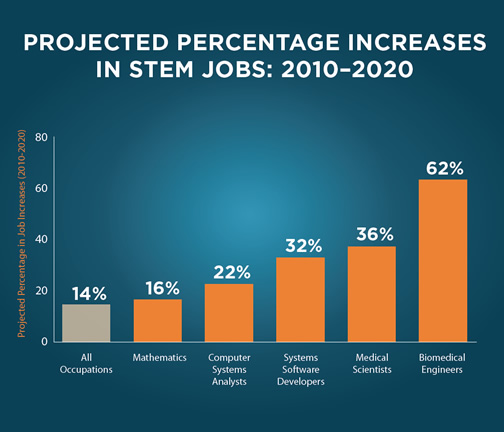
The nonprofit Changing the Equation is backed by business and has support from the federal government. Below are some figures of how data collected shows both inequities in resources and how job opportunities are projected to change in the coming years in our state:


     Before I began volunteering with the Ocean Discovery Institute, they had just received an award from the Obama administration for the Presidential Award for Excellence in Science, Mathematics, and Engineering Mentoring. Their mission is to “empower young people from underserved urban communities to transform their lives, their community, and our world as scientific and conservation leaders” (By Engaging In All Action).


     In my role, I volunteered in the Ocean Science Explorers program. During my time there, I really enjoyed assisting the students use tools like microscopes for the first time. We would take the students on field trips to parts of San Diego to get them outside. When the buses pulled up to the tide pools in La Jolla, the students were amazed to explore the vast abundance of marine life literally in their backyard. Another field trip was taking them to our headquarters, which was a series of trailers in Pacific Beach. There we would allow the students to create their own robotic hydroplanes and test their creations in the pool. Our goal was not just to teach facts and figures, but to show the students what all of their efforts could lead to. Our focus was to inspire them to imagine a career path in STEM, which for many of the students would result in a vast departure from what other members of their families may be doing or have done.

     During my time at USD, I made an effort to actively participate in social justice causes and try to experience something different from what I knew. I reflected a lot on the differences between the opportunities I have been exposed to, and how they differ from the opportunities these students may have. I went to public school K-12, and had the opportunity to take physics, calculus, AP Biology, AP Chemistry, and go to my community college through Running Start if my school didn’t offer what I needed. Having those classes prepared me to go on to a private school college education and major in a degree that included several science courses.

     Being a self-proclaimed environmentalist, I also must reflect on my hypocrisy on a daily basis. It’s easy to think that our education system is doomed and that we’re using outdated techniques and technology. However, I think there are a lot of reasons to be really positive and optimistic! Sal Khan is the founder and director of Khan Academy, a web based collection of YouTube videos that can be used to refresh a set of skills or as a supplemental learning tool. It is one of the prime examples today of what open source education can look like.

“We have all these doom-and-gloom arguments about America losing its primacy and all this stuff about our math scores. But if you take a serious look over the last 30 or 40 years, if you said, “What are the most innovative companies in the world? Where is the innovation happening?” And if you just follow and ask that question, year after year after year, it’s getting more and more focused in America” (Education for Everyone).

     With all of the advances in technology and innovation happening, it’s time to realize how important science education can be and how transformative it can be for students. With the conservation district, I have the opportunity now to offer free science education lessons to local schools. The curriculum is provided by the Franklin Conservation District. I offer a week long option, aptly named Wheat Week, where I use Wheat as a teaching tool to showcase lessons about soil conservation, the water cycle, and watersheds. I also offer Water on Wheels lessons, which offer a variety of environmental science lessons that are interactive and engaging to students grades K-6th.

     I really appreciate the opportunity to bring science education to classrooms that otherwise might not get the chance to explore the material in depth. Hopefully, even if they don’t retain the information I teach them, it ignites a spark in them that motivates them to want to take an interest in math, science, or engineering. I’m not teaching robotics or molecular biology, but just getting our youth familiar and comfortable with basic scientific concepts may actually allow them to seek out advanced science education and not write it off as boring or too difficult. It’s not a cure all, but it is a step in the right direction.

To learn more about STEM in Washington State, look at http://vitalsigns.changetheequation.org/state/washington/overview

For more information about the programs I help implement through Cascadia, check out http://franklincd.org/wheatweek.aspx If you're a teacher in Chelan, Douglas, or Okanogan counties and want to have me come to your classroom, send me an email at cascadia-americorps@conservewa.net.

Thanks for reading!

~ Ava

Bush, George W. American Competiveness Initiative. 2 February 2006. georgewbush-whitehouse.archives.gov/stateoftheunion/2006/aci/index.html
By Engaging in All Action with Curiosity and Commitment, We Can Ignite a Passion in Each Person That Collectively Will Benefit Our World. "Home." Ocean Discovery Institute. www.oceandiscoveryinstitute.org
"Education for Everyone: An Interview with Sal Khan." McKinsey & Company. September 2013. www.mckinsey.com/industries/social-sector/our-insights/education-for-everyone-an-interview-with-sal-khan.
"Educate to Innovate." The White House. The White House. www.whitehouse.gov/issues/education/k-12/educate-innovate
"Franklin Conservation District." Franklin Conservation District. franklincd.org/wheatweek.aspx


Wednesday, February 24, 2016

Let's Get (Native) Planting!

Black Huckleberry
Spring is definitely in the air- little bits of green life are starting to make their brave entrance into the world, the piles of snow that once towered are shrinking by the minute, and we at Cascadia are starting to think about our springtime projects.

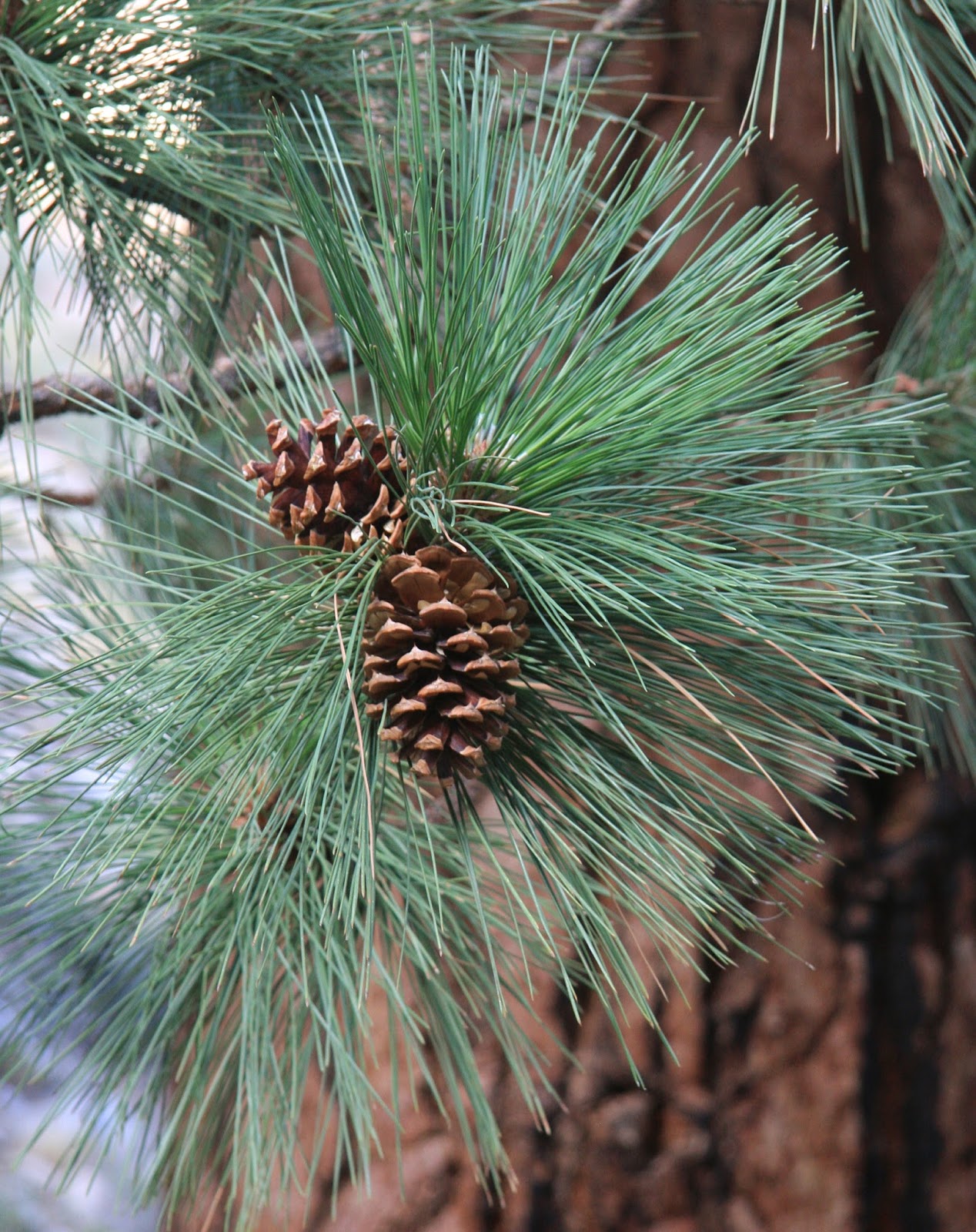
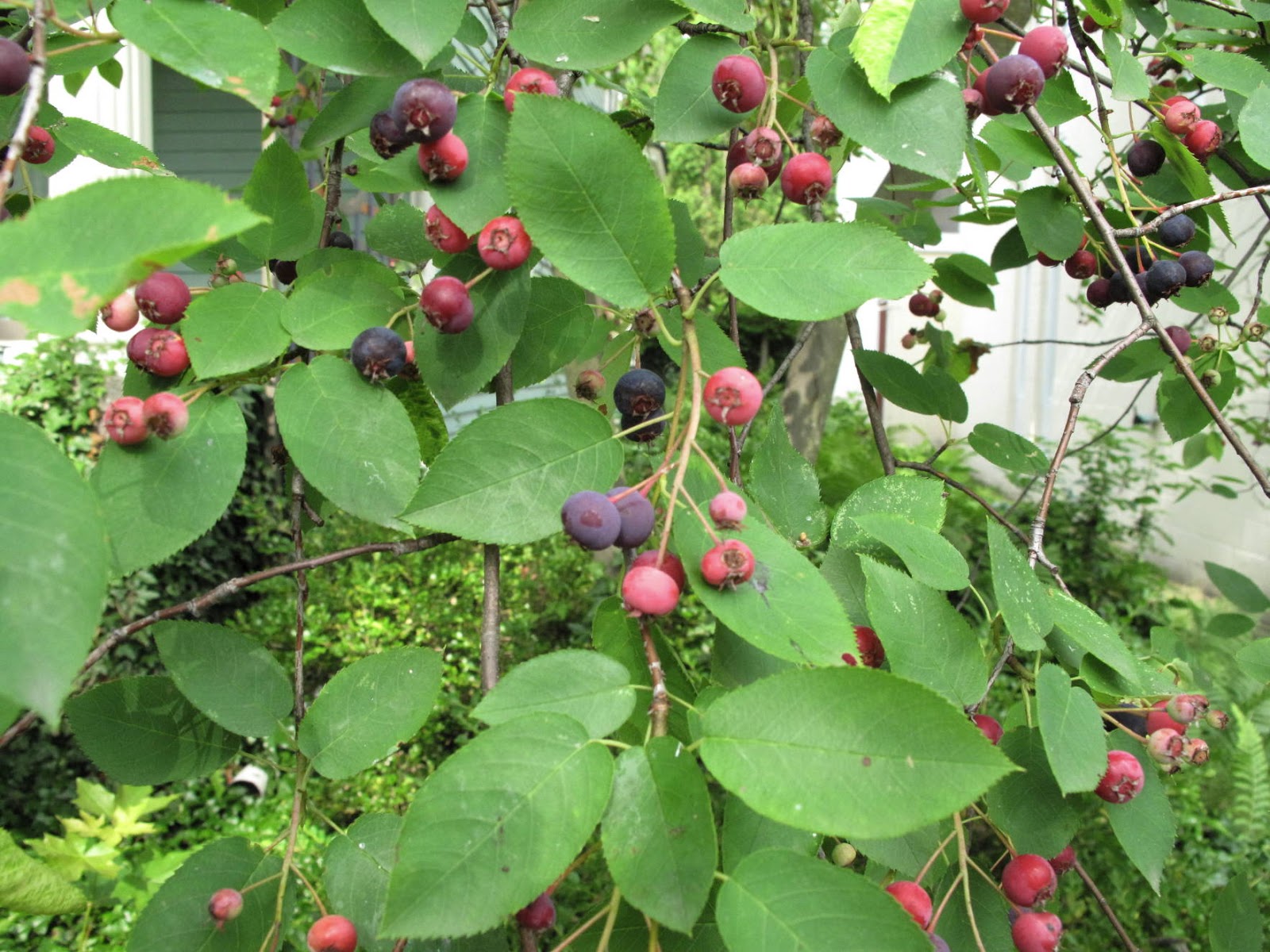
The main one I want to touch on today is our Native Plant Sale and Workshop. This year we are offering nine different species of Native Plants. These plants are grown from Eastern Washington seed stock by the Washington Association of Conservation Districts Plant Materials Center in Skagit County. Plants offered include Ponderosa Pines, Vine Maples, Black Huckleberry and Red Osier Dogwood, among others. These plants are commonly used for restoration, soil stabilization, and some are considered to be fire resistant. A brochure describing the uses and benefits for each plant is linked to our website, along with an updated plant listing, and order form. Plant orders are due by March 4th and can be mailed into the Cascadia Conservation District office with a deposit. Once ordered, you can pick up your plants on April 16th from 10am to 1pm at the Stemilt Growers Warehouse in North Wenatchee.

Ponderosa Pine
If you are interested in ordering Native Plants, but have no idea how to best utilize them on your property then you may be interested in attending our Native Planting 101 Workshop. This FREE workshop is taking place on March 5th from 12 to 4:30 pm at the PUD Auditorium on N. Wenatchee Avenue. This workshop is perfect for landowners in our district who are interested in learning techniques to effectively use native plant species to encourage pollinators, restore damaged areas, and create a low maintenance yardscape. It may be particularly useful for property owners who lost vegetation in last summer’s fires or for those who are seeking to become more FireWise. The workshop features presentations on Yardscaping, Pollinators, Restoration, and Integrated Weed Control Methods by local plant and natural resource experts. Workshop attendees will have an extended deadline of March 11th for ordering plants from the Native Plant Sale. You can register for this free event on our website!

Serviceberry
If you are interested in either of these events you can find more information on our website, cascadiacd.org. Our Native Plants are selling out quickly, so if you haven’t already had a chance to make your plant selections, I strongly urge you to do so as soon as possible! We are also looking for more volunteers for both of these events- if you are interested in volunteering send an email to americorps@cascadiacd.org. 

-McKenzie

Friday, November 20, 2015

Living with Wildfire

One of the most defining elements in my life has been wildfire. It started at 18 months old, when my family’s home up the Entiat Valley was one of thirty five destroyed by the Tyee Fire. While I have no memory of that actual day, the scars from that fire are still very real. Growing up, it meant that my first phrase was “burnt trees” and playing outside always ended with charcoal covered clothes. Now, it means not having access to my parent’s record collection, my dad’s climbing gear, old family photo albums. While frustrating- I can quite easily live without those things. What I really struggle with now, are the more frequent, higher intensity fires, and the advances the fires have made into more populated areas and the Glacier Peak Wilderness- my favorite playground. The thought of backpacking into places that were once a wonderland but are now turned to a crisp, puts knots in my stomach. It is a destruction that I have a really hard timing coming to terms with, because it is so personal to me.

One really powerful thing that growing up in an area that has been so harshly affected by a natural disaster did to me, was allowing me to witness and appreciate the rebirth. Looking across the valley outside my parent’s front window (of the house they rebuilt a few years after the fire) one person might only see the hundreds of blackened trees- but I see an equal amount, if not more, 10-15 foot tall trees that have grown since. I literally got to grow up at the same time as the plants in my valley- and that is pretty special.
Living in an environment where natural disaster is so prevalent can definitely make someone want to give up- and usually around July of every summer when the air is thick with smoke and plumes dot the horizon, I do want to. However, I do believe it is a fight worth fighting- I am far too connected to these landscapes to give up and walk away. In college, I fought the fight by working for the Forest Service- my base job was working as a member of the Recreation Crew- but in my second season I earned the certifications needed to work at dispatch. That season and the next I worked 75 hours a week, with nearly zero days off, managing the equipment, crews, supplies, and overhead personnel needed to fight the 500,000 plus acres of Central Washington land that was on fire.

In my current position as an AmeriCorps doing environmental education, I am fighting the fight by teaching future generations how to understand and respect the fine balance needed to live in peace in a wildfire ecosystem. Through the Wenatchee Valley Museum’s exhibit ‘Wildfires & Us’ and their educational program they have designed to go along with it, I have the opportunity to teach 3rd-10th graders about wildfire ecology and history in our area. An especially poignant moment each time that I teach this lesson is when I hold up a section of a tree that was killed in the Tyee fire and use it to explain the history of fire in our country. On this tree cookie (a 4 inch thick section of a tree), you can clearly see the Pith of the tree- when it was born in 1810- and all the subsequent tree lines that show it survived eight fires between 1810 and 1929, and then was eventually killed in 1994 by the Tyee fire. I explain to the students that because there were semi-frequent, low-intensity fires in the first 119 years of its life, the tree was able to survive. But due to the exclusion of fire in the later 65 years of its life, because of policies developed following the 1910 Big Burn- like the 10 AM policy developed in 1935- ground and ladder fuels were allowed to build up leading to the subsequent death of the tree in 1994. This is usually an “ah-ha!” moment for many students and allows me to bring the lesson of wildfire ecology full circle. We are teaching them that wildfire management is still being developed- we thought we had the answer for the last century, but have now realized that we were doing it wrong, and it is time to look for new solutions. I strive to inspire the students to think about solutions to the epidemic of overcrowded, weak, dying, and thus flammable trees. We talk about Department of Ecology policy regarding controlled burns, Mountain Pine Beetle infestations, and tactics to reduce fuels. My hope is that the students come away with an understanding of the recipe for a firestorm, what a healthy forest should look like, and a spark to the question of “what’s next?”
I believe there is power in developing policy at a high level in an effort to incentivize actions that would reduce risk of loss from wildfire. But, I also strongly believe in the power of educating future generations so that they grow up with an understanding of the issues and are that much more motivated and prepared to work towards a solution when they enter the workforce. It is apparent that the Wenatchee Valley realizes there is a problem- and I look forward to seeing solutions arise in upcoming years!
If you hadn’t had a chance to check out the Wildfires & Us exhibit at the Wenatchee Valley Museum- today is the last day it is being shown, and I strongly urge you to check it out. It combines the talented photography of John Marshall and the extensive knowledge of Paul Hessburg and is extremely informative about wildfire ecology historically and looking into the future. Additionally, check out these amazing videos made by North 40 Productions that were shown at the Wildfires & Us Summit last week. They detail last summer’s fires and the educational program at Squilchuck: https://vimeo.com/north40productions.
I would love to read your thoughts on the summit or exhibit if you were able to attend, or attempt to answer any questions you might have regarding life in a wildfire ecosystem. As always, thanks for stopping by!
-McKenzie

P.S. If you were affected by last summer's fires and are wondering what steps you should be taking now, on Tuesday, November 24th, at the Chelan Fire Station from 6:30-8:30, there will be an After the Fires Community Meeting. Representatives from local agencies as well as experts on post fire recovery will be present to answer questions. We hope to see you there!

Monday, October 12, 2015

Engaging in Environmental Education!

One of my main responsibilities as the AmeriCorps intern for Cascadia is to provide environmental education in the district’s local schools. Depending on a teacher’s schedule and planned curriculum, I get to spend anywhere from 1-5 hours with a group of students aged 5-12. In that time I have the opportunity to shape our valley’s young people’s understanding of ecosystems and help them understand the ways in which humans can influence those ecosystem functions. This is a responsibility I do not take lightly, especially in a time where funding for education is getting tighter and the need for a society with an understanding of our planet’s functions and needs is becoming direr. And fortunately, through Cascadia’s partnerships with other organizations and conservation districts, I have access to fun, free science curriculum that incorporates hands-on learning opportunities in every lesson.

Water on Wheels Lessons
The main curriculum that I teach is called Wheat Week. This is a five day program created by the Franklin Conservation District (FCD). Wheat Week uses the wheat plant as a tool to educate 4  th and 5th graders about systems, water, soil, pollution, and energy. During this week, students get to build their own terrariums and grow a wheat plant, experience the water cycle as a water droplet, investigate the different types of soil, create a watershed model, and thresh a wheat plant. Another program I teach, also created by FCD, is called Water on Wheels. This program consists of eight different lessons, which can be taught as a series or individually depending on a teacher’s needs. These lessons educate students, in varying levels of depth depending on their grade level, about soils, the water cycle, animal habitats, and watersheds. Each lesson involves a different science experiment, game, craft, or environment model. All of the FCD’s curriculums meet a number of science and social studies Washington State learning standards. They also incorporate GLAD strategies. GLAD – which stands for Guided Language Acquisition Design- is a program that originated in California and is in its first phase in the Wenatchee School District. It strives to “promote an educational setting that produces effective, literate citizens of a global society.”

I also have opportunities to work with local schools at events like Salmon Fest where we host the Rolling Rivers exhibit, at the Wildfires & Us Field experience put on through the Wenatchee Valley Museum, and at Kids in the Creek where we work with our partner agencies to get kids outside in the Entiat River doing science. Additionally, I coordinate Native Planting 101 (planned for March 5th, 2016!) a workshop open to the public, where anyone of any age can come and learn about effective landscaping and plant care in the Wenatchee area.  

My week of in-class training with the FCD is done and I am currently filling my schedule in with lessons. If you are interested in volunteering at an event, know a teacher who might interested in lessons, or have a question, comment, or nugget of advice- all are welcome in my inbox (americorps@cascadiacd.org)!

Thanks for stopping by!

-McKenzie

Resources: