Showing posts with label native. Show all posts

Tuesday, February 14, 2017

Native Planting 101 Recap


Last Saturday, February 11th, Cascadia Conservation District, with the help of AmeriCorps member Ava, hosted a Native Planting 101 workshop. 

AmeriCorps member Ava introducing speakers.


Connie Mehmel's Presentation 
It was a 4 ½ hour workshop with four presentations covering pollinator gardening, yardscaping, restoration, and weed management.


We had 46 adults attend, in addition to two volunteers and four speakers. 


Our 2017 Native Plant Sale is still accepting orders through March 1st!

All 11 species are still available. 

Download an order form HERE!

You can access some of the information presented on our website at http://cascadiacd.org/native-planting-101-workshop_335.html

If you missed this year’s workshop, look for next year’s workshop info in Cascadia’s winter newsletter.


Ted Alway's Presentation 


Listed below are some wonderful resources to get you started on planning your natural yardscape:


Native Plants

  • Washington Native Plant Society www.wnps.org
  • WTU Herbarium Image Collection: Plants and Lichens of Washington         www.biology.burke.washington.edu/herbarium/imagecollection.php
  • USDA-NRCS Plants Database  www.plants.usda.gov/java
  • Chalker-Scott, Linda. Sustainable Landscapes and Gardens: Good Science- Practical Application. GFG Publishing, 2009.
  • Fitzgerald, Tonie, Eve Carroll and Michael Terrell. Landscaping with Native Plants in the Inland Northwest. Publication MISC 0267.  WSU        Cooperative Extension, and US. Dept. of Agriculture, 2000.
  • Kruckeberg, Arthur R. Gardening With Native Plants of the Pacific Northwest. University of Washington Press, 1996.
  • Link, Russell. Landscaping for Wildlife in the Pacific Northwest. University of Washington Press, 1999.
  • Tallamy, Douglas W.  Bringing Nature Home: How You Can Sustain Wildlife with Native Plants. Timber Press, 2007.
  • Taylor, Ronald J. Sagebrush Country: A Wildflower Sanctuary. Mountain Press Publishing Company, 1992.

Weeds

  • Washington State Noxious Weed Control Board     www.nwcb.wa.gov
  • Chelan County Noxious Weed Control Board   www.co.chelan.wa.us/noxious-weed
  • Washington Invasive Species Council                                                                                          www.invasivespecies.wa.gov 
  • Burrill, Larry C., Steven A. Dewey, David W. Cudney, and B. E. Nelson. Weeds of the West. Western Society of Weed Science, 1999.

Yardscaping


Pollinator Gardening


~ Ava

Wednesday, February 24, 2016

Let's Get (Native) Planting!

Black Huckleberry
Spring is definitely in the air- little bits of green life are starting to make their brave entrance into the world, the piles of snow that once towered are shrinking by the minute, and we at Cascadia are starting to think about our springtime projects.

The main one I want to touch on today is our Native Plant Sale and Workshop. This year we are offering nine different species of Native Plants. These plants are grown from Eastern Washington seed stock by the Washington Association of Conservation Districts Plant Materials Center in Skagit County. Plants offered include Ponderosa Pines, Vine Maples, Black Huckleberry and Red Osier Dogwood, among others. These plants are commonly used for restoration, soil stabilization, and some are considered to be fire resistant. A brochure describing the uses and benefits for each plant is linked to our website, along with an updated plant listing, and order form. Plant orders are due by March 4th and can be mailed into the Cascadia Conservation District office with a deposit. Once ordered, you can pick up your plants on April 16th from 10am to 1pm at the Stemilt Growers Warehouse in North Wenatchee.

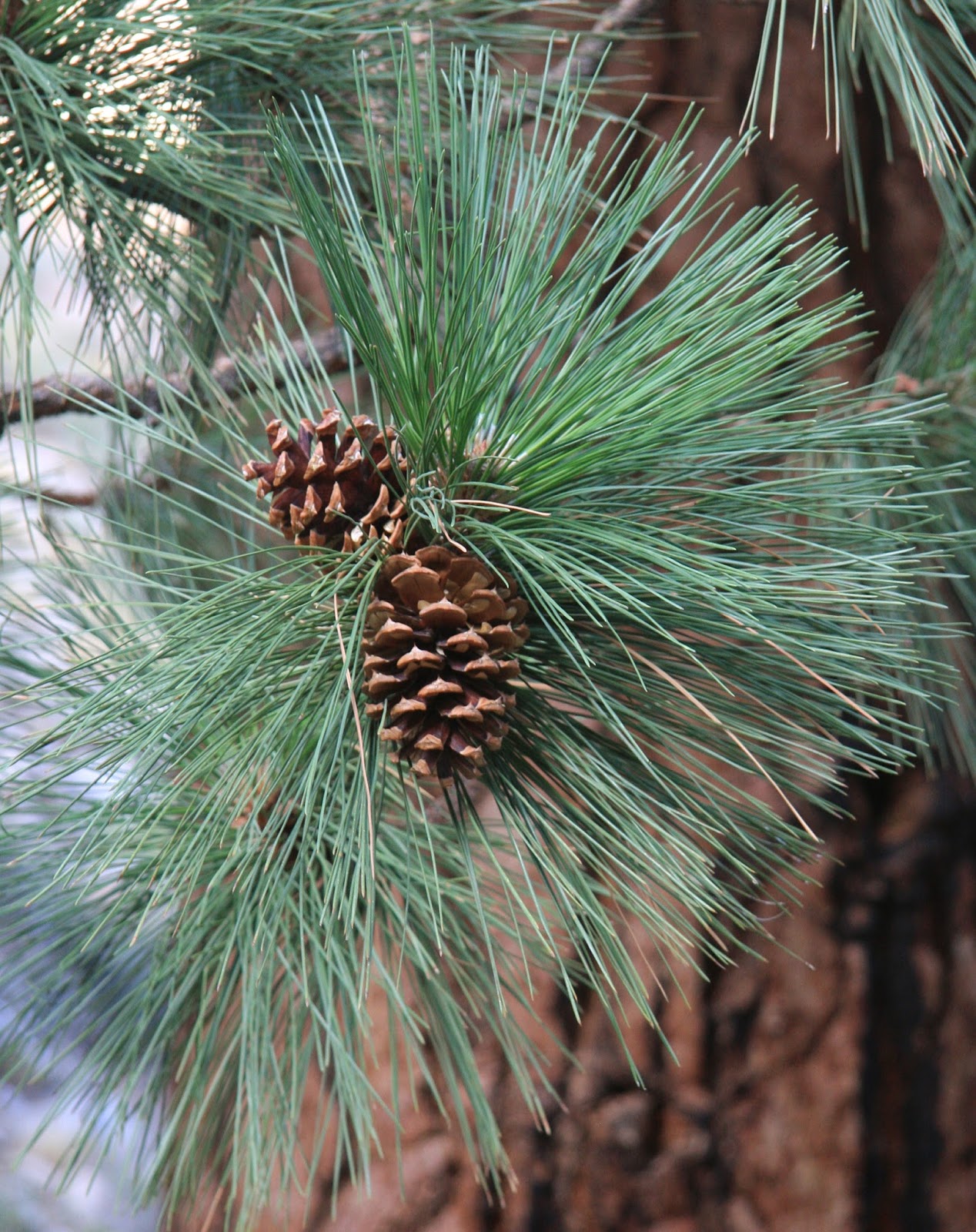
Ponderosa Pine
If you are interested in ordering Native Plants, but have no idea how to best utilize them on your property then you may be interested in attending our Native Planting 101 Workshop. This FREE workshop is taking place on March 5th from 12 to 4:30 pm at the PUD Auditorium on N. Wenatchee Avenue. This workshop is perfect for landowners in our district who are interested in learning techniques to effectively use native plant species to encourage pollinators, restore damaged areas, and create a low maintenance yardscape. It may be particularly useful for property owners who lost vegetation in last summer’s fires or for those who are seeking to become more FireWise. The workshop features presentations on Yardscaping, Pollinators, Restoration, and Integrated Weed Control Methods by local plant and natural resource experts. Workshop attendees will have an extended deadline of March 11th for ordering plants from the Native Plant Sale. You can register for this free event on our website!

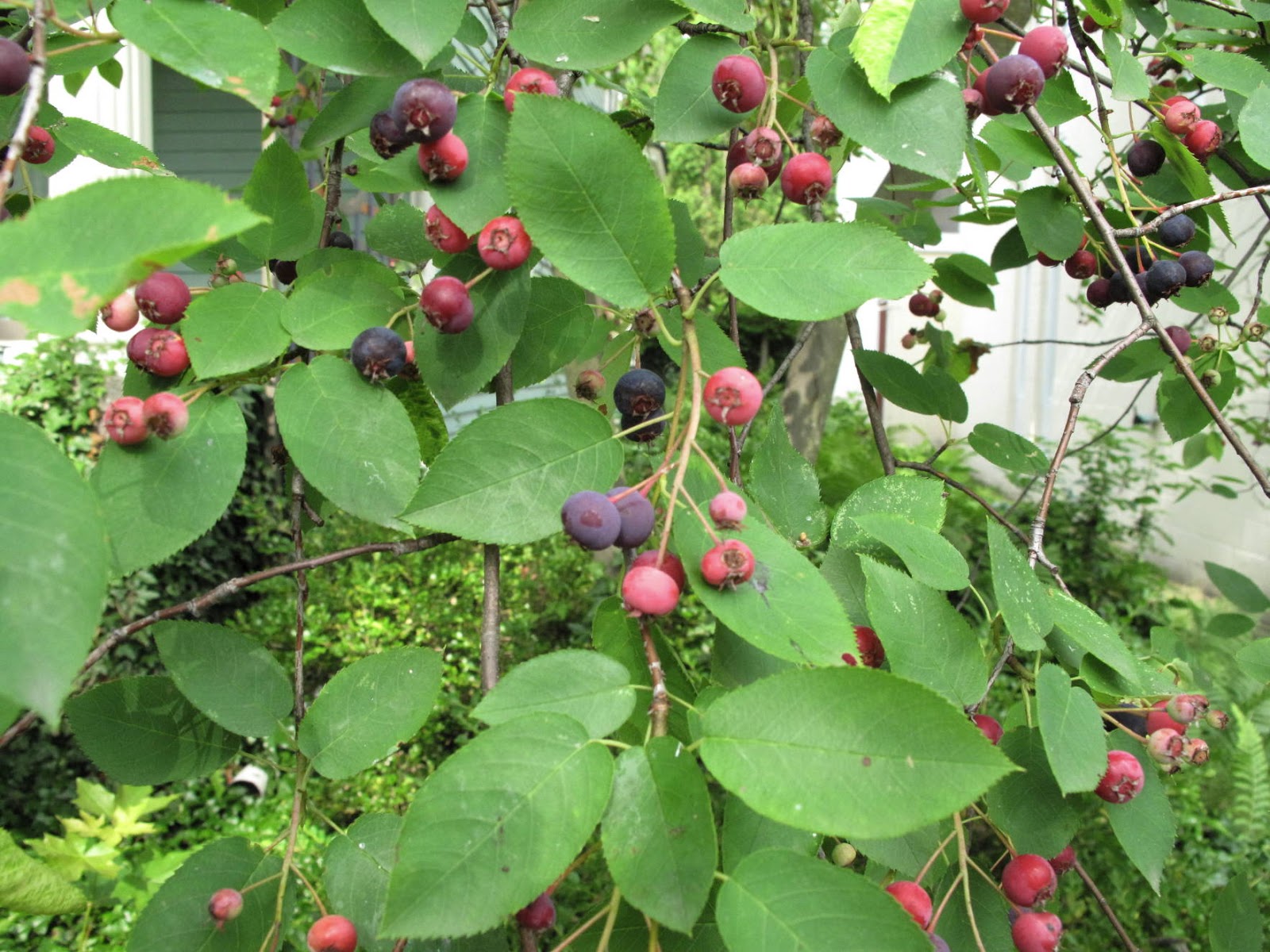
Serviceberry
If you are interested in either of these events you can find more information on our website, cascadiacd.org. Our Native Plants are selling out quickly, so if you haven’t already had a chance to make your plant selections, I strongly urge you to do so as soon as possible! We are also looking for more volunteers for both of these events- if you are interested in volunteering send an email to americorps@cascadiacd.org

-McKenzie

Thursday, February 5, 2015

Wild and Scrumptious

Continuing with our native plant theme, and considering several of our native plants for sale are edible, it seems appropriate to devote a blog to edible native plants. Before delving into this topic, I’d like to be clear that eating plants found in the wild holds some risk and should not be done in a casual manner. If you’re a novice identifying plants or are unsure, it’s best to get a second or third opinion from someone in the know before munching down.

There are many benefits to eating wild plants. First of all it’s free, and as someone on a tight AmeriCorps budget, I’m all for free. Also, generally speaking, plants lose nutritional value the longer they sit after being harvested. So you get more bang for your buck when you eat freshly harvested plants. Depending on values and disposition, it’s also common that people gain a deeper appreciation for the things they eat when they’re able to see their food in its natural environment and gather it themselves.

Being a novice in the subject myself, it seems the best place to start is with plants that are relatively easy to identify and have no poisonous lookalikes. It’s also recommended that one learn the few poisonous plants around in order to better avoid them. The following are just a few examples of the many tasty edible plants you can find in our area:

-Evergreen Huckleberry produces edible berries, which are commonly used to make delicious jelly and jam.
Evergreen Huckleberry (Vaccinium ovatum)
-Hooker’s, or tapertip onion has edible flowers and bulbs and can be consumed raw or cooked. While raw this onion is said to be overpowering, it’s purportedly sweet and delectable when cooked.

Hooker's Onion (Allium acuminatum)
-Camas also has edible bulbs which can be eaten raw or cooked. When cooked, they’re known to be sweeter than a sweet potato. The bulbs can also be ground into flour. It should be noted that Camas has a deadly lookalike aptly named "death camas". To avoid any fatal mix-ups, double, triple or even quadruple check to be sure you've got the right camas. It's easiest to distinguish one from the other while they're flowering.


Camas (Camassia)
-Wild licorice was commonly used by Native Americans. They have sweet, fleshy roots which get sweeter when cooked.
Wild Locrice (Glycyrrhiza lepidota)
If you’re like me, your mouth is watering just thinking about those scrumptious local flora and you can’t wait to get out and try your hand at finding, preparing and devouring such delicacies. And, if you’re a novice like me, you probably need to pump your breaks, hard. Not only is it the wrong time of year to be gathering many of these edible plants, but there are also some guidelines everyone should abide by when harvesting wild plants. This list of dos and don’ts is from the Washington State University Snohomish County Extension website (http://ext100.wsu.edu/snohomish/wp-content/uploads/sites/11/73aEdibleWildPlants.pdf):

  • Know what you are picking
  • Collect only what you can positively identify as edible
  • Harvest only plants that look healthy in uncontaminated areas
  • Clean and prepare wild foods like you do cultivated crops
  • Eat only small quantities when first trying an edible plant
  • Get property owners' permission before gathering wild foods
  • Never over-harvest. Take only what you can use and use what you take.

If this blog has convinced you to take up gathering wild edible plants, there are plenty of resources online to help you get started. There are also some great field guides worth their weight in edible flora such as A Field Guide to Edible Fruits and Berries of the Pacific Northwest by Richard J. Hebda and Edible and Medicinal Plants of the West by Gregory L. Tilford.

While it’s been raining down here in Wenatchee, the higher elevations have been getting snow which has increased our snowpack in this area to 64% of the 34 year average (ftp://ftp.wcc.nrcs.usda.gov/data/water/wcs/gis/maps/wa_swepctnormal_update.pdf).


Thursday, January 29, 2015

Icons of North Central Washington


With this post we’ll conclude our look at the native plants offered by the Cascadia Conservation District. If you’d like to see the full plant list, make an order or get more information please visit our website.

These final two plants are symbols of our region. The grand ponderosa pine (Pinus ponderosa) and the vine maple often come to mind when thinking of healthy ecosystems in our area.

My favorite tree of all time, icon of the west and reigning top seller in our plant sale is the ponderosa pine tree. Ponderosa pine, colloquially ‘pondo’, is characterized by its orange, scaly, plate-like bark and long green needles which are typically borne in bundles of three. Growing to around 100 feet in mostly open stands, ponderosas often have the appearance of dominating their surroundings. They are also known for smelling like vanilla.

Very well adapted for our climate east of the Cascades, ponderosa pine isn’t just fire tolerant, it depends on fire. With its thick bark a large ponderosa can handle the low intensity fires that were ubiquitous to this area prior to modern forest management. These fires eliminated the pondo’s resource competitors, allowing it proper exposure and sufficient resources. Since management plans have included enthusiastic fire suppression, shade tolerant trees and shrubs have moved into ponderosa stands throughout the west, lending such stands the characteristics necessary for the increasingly large scale fires we’ve been seeing as of late.

As for conservation uses, ponderosa is commonly used in shelterbelts, living snow fences and in riparian restoration. Ponderosa stands make great habitat for squirrels, birds and bats and provide shelter for big game. Because ponderosa needs exposure, it is a seral species which, when mature, can provide the necessary shade for shade tolerant species to return after a significant disturbance. This makes it an excellent native plant choice for post fire restoration.

Vine maple (Acer circinatum) is another iconic native plant in our region. It is a deciduous tree with red and white flowers in the spring, and brilliant red to subdued yellow broadleaves in the fall. Typically vine maple will grow between 10 and 30 feet tall, with shaded specimens reaching the upper end of that range readily and exposed specimens on the shorter side.

Vine maple grows best along streams and moist sites. It prefers shady sites, but can tolerate some exposure.  In more exposed sites it often takes a single-stemmed tree form, while in shade it usually grows as a shrub in clumps and thickets.

With its white and red flowers in the spring and showy colors in the fall, vine maple is a common choice for those looking to use native species to beautify their landscaping. It is also used as a streamside stabilizer, as a pioneering species at disturbed sites and is an important food source for birds and large and small mammals alike.

Again, if you’re interested in ordering any of our plants, need more information or would like to sign up for our native planting workshop, please see our website.

Today’s Central Columbia River area snowpack is currently at 63% of its 29 year average (USDA/NRCS National Water and Climate Center, http://www.wcc.nrcs.usda.gov).

Thursday, January 22, 2015

Broadleaf Bonanza

For this week’s blog we’ll examine three broadleaf shrubs: the Oregon state flower, a red-barked soil retainer and stinky white flowers. Remember, these are but three of Cascadia’s 14 native plants for sale. To make an order, see a complete plant sale list or sign up for our free native planting workshop, please see our website.

Oregon Grape
Oregon Grape
Oregon grape (Mahonia aquifolium), Oregon’s state flower, is my favorite shrub in this year’s sale. With a waxy texture and sharp leaflets, its evergreen leaves strongly resemble those of ivy. Oregon grape produces dense clusters of small yellow flowers followed by tart, dark blue berries. It typically grows three to six feet tall and five feet wide.

Oregon grape will grow in a variety of settings, from the coastal range to the eastern slopes of the Cascades. It can grow in soils from moist to dry and at exposed to shady sites, but is especially well adapted for drier, exposed sites which makes it a great restoration species. It propagates via suckers and has an extensive root system, making it an excellent soil stabilizer. Birds and rodents are attracted to the berries and the new growth and leaves can be a food source for elk and deer.

Red osier dogwood (Cornus sericea) can grow to about 20 feet tall and 20 feet wide. It has thin, waxy, red bark with green deciduous leaves that turn red in the fall. In the spring it grows the beautiful white clusters of flowers characteristic of dogwood.

Red Osier Dogwood
Red osier dogwood often grows in dense thickets along riverbanks and is found much more sparsely at higher elevations and drier sites. While it prefers plenty of exposure, it will tolerate shade. It’s proclivity for moist soils and open sites and its extensive root system make it a great streamside restoration plant. It can stabilize soil as well as provide shade and habitat for fish. Its foliage is also an attractive food source for elk and deer.

Blue Elderberry
Blue elderberry (Sambucus nigra ssp. cerulea) is one of the largest shrubs we offer growing up to about 30 feet tall and 20 feet wide. It dawns white flowers in the spring which are aesthetically pleasing but emit a slightly rancid smell. These smelly flowers give way to purple or black, waxy berries. It has long, narrow green leaflets up to six inches long. 


While it can grow in a variety of habitats, blue elderberry does best on exposed sites. It’s an early seral species, but can persist beyond initial succession. In conservation, blue elderberry has a number of uses including riparian restoration, erosion control and habitat improvement.


Thanks to a brief, though much needed storm last weekend, the Central Columbia River area snowpack is currently at 71% of the 29 year average.  More specifically, as of January 1, the Wenatchee River drainage was at 68% of its 29 year median.  (USDA/NRCS National Water and Climate Center, http://www.wcc.nrcs.usda.gov). 

Tuesday, January 13, 2015

Three More Native Beauties...

I’d like to use this post to continue the tour of native plants offered by the Cascadia Conservation District. If you’d like to place an order, get more information or register for our native planting workshop, please see our website. Two of these next three native plants, woods’ rose and golden currant, are old plant sale standbys, while evergreen huckleberry is back for the first time since 2012.

Woods' Rose
Woods' rose (Rosa Woodsii), or Interior rose, grows in a variety of soils and climates, even in places with very little topsoil and at high elevations. It does well in varying degrees of sun exposure. It should also be mentioned that wild roses are far less susceptible to disease and recover much quicker than domesticated roses.

The woods’ rose is an excellent choice for someone looking to beautify their property in a harsh climate. As well as being a hardy survivor, it also dawns magnificent pink flowers and bright red hips. Because of its ability to grow with little soil on steep slopes and in generally tough conditions, the woods’ rose is a top choice for restoration.

Evergreen Huckleberry
Evergreen huckleberry (Vaccinium ovatum) is another hardy plant we offer. Though it is commonly found in coniferous forests and prefers shade, it can grow in full sunlight and sandy soil and it is drought tolerant.

In the spring the evergreen huckleberry, in ideal conditions, will grow light pink, urn-shaped flowers which will transform into delicious red, then purple berries. Its leaves are egg shaped, dark green and have a reddish hue when immature. The evergreen huckleberry grows up to 13 feet tall.

Golden Currant
Golden currant (Ribes aureum) is a deciduous shrub that grows up to 6 feet tall and 6 feet in diameter. Its waxy green leaves turn a showy yellow in the fall and the shrub produces yellow flowers which morph into berries of various colors.


Golden currant can grow in a variety of sites, from moist bottomlands to exposed hillsides making it a good soil stabilizer for nearly any location. Also, while its berries may taste tart to us, but they’re a favorite for birds and small mammals.


Today’s snowpack as a percent of average is 64% (USDA/NRCS National Water and Climate Center, http://www.wcc.nrcs.usda.gov).
 
USDA/NRCS National Water and Climate Center

Tuesday, June 17, 2014

Dry Spring

Summer is nearly upon us. And for the first time in a few years I feel like the weather has progressed in an appropriate fashion, slowly transitioning out of winter, warming up in early spring, some hot days in May, but generally a constant increase in temperature without a lot of fluctuation. The hills were spring green, the flowers bloomed, and now as we move into summer they’re taking on their more traditional ‘golden’ color.  I consider it an almost perfect spring.
Perfect except for the lack of moisture. It’s looking to be a dry summer. Three small blazes have already occurred in and around the area. One from lightning, one from a campfire, and the most recent may be linked to fireworks. While two of those were easily preventable (i.e. don’t play with fire outside in the summer), it still bodes poorly for this summer’s fire season.
It’s been a dry spring. That’s not to say there is or will be a lack of water. Last I looked the river was flowing along just fine, full of cold and (somewhat) clear water. Water still flows from our taps and our lawns are just as green as ever. The snowpack near the end of winter was just about where it needed to be to ensure proper water flows down the rivers and through our pipes.
The lack of spring moisture will be felt more in the hills and forests. Areas we can’t just turn on the sprinkler and let the water flow upon the parched land. And guess what? The native plants don’t care. There’s a reason they’re native. They survive and thrive in this climate. Going for a few months without water from the sky is natural.
Some of them survive by doing all their growing and flowering in the spring when there’s water available from snowmelt. At this point annuals usually die off leaving behind their seeds to sprout up the following spring. Some perennials die back and wait out the summer, fall, and winter, sprouting with new growth when spring comes again. Other plants survive and grow throughout the year by sinking roots deep into the soil to get at the water that never quite evaporates.
The problem is invasive plants thrive in this climate as well. They’re invasive because they can outcompete native plants. Whether by taking over areas native plants don’t usually grow, colonizing a disturbed area quicker, or some combination of these and other reasons.
Wildfires are a natural part of the ecosystem. And in a healthy ecosystem they generally burn quickly through an area and move on. The problem we have is the amount of material present creates dangerous fire conditions. Invasive plants grow around natives filling in what may have been a ‘natural’ fire break. Lack of fire over several years allows native plants to grow bigger and spread over a larger area than they have historically. All this leads to bigger and bigger fires.
Which can be counteracted by higher levels of moisture. It’s hard for fires to burn through green grass or damp soil. If there had been more spring rain the three small fires this year might not have occurred. Rain can counteract an unhealthy aspect of an ecosystem. The thing is we can’t count on the rain. Our area is dry and prone to fires. Hoping for moisture won’t change that.
Many wildfires can be prevented through safe outdoor activities: no campfires, no sparks, etc. But the lightning strike that started the first wildfire this year is not something we can control. Lightning is a natural process and was the original igniter for the natural wildfire cycle of our area. Putting it out was probably the correct thing to do. Wildfires have been suppressed long enough that to let them burn unchecked will lead to massive ecological and property damage. But we’ve also reached the point that any wildfires that do start will take on a life of their own and provide a real challenge to control and stop.
Funny how a lack of falling water from the sky can have such an impact on our area. We’ll probably be fine. Most people are safe when they’re outdoors in the middle of the summer with the fire danger. And hopefully it doesn’t turn into a smoky, miserable summer.

Friday, May 30, 2014

May Wrap Up

May is drawing to a close and I realize that this is the first (and only) blog post for the month. It’s been a busy month with most weeks full of a variety of activities that demanded my attention and kept me out of the office. However, I didn't want to end the month without highlighting a few of the things that occurred, so here they are.
 Several weeks in April and May saw me helping with science field days around Wenatchee. First was a 5th grade shrub steppe experience, next a similar experience for 1st graders, after that a kindergarten walk, and finally at the end of the month a 4th grade science day revolving around fish and hydroelectric power. That seems like a lot, but for the most part I really enjoyed all of it. I helped with plant identification and counting, native wildlife, ecosystems, and fish statistics. It was good that I had a presence there, both as an Americorps member and as a representative of Cascadia. Cascadia has an effect, both directly and indirectly, on many of these ecosystems through their work in conservation and restoration. It’s helpful to be able to introduce the kids to the ideas of natural ecosystems and the organizations that are involved with preserving them.
May’s next event was Kids in the Creek (KITC). KITC is a program put on by Cascadia in partnership with the US Fish & Wildlife Service and the Forest Service, along with many others. The program is designed to get young high school students hands on science through a variety of stations. Half of the stations are ‘dry’ and include: water quality, fish health, and riparian vegetation. The other half are ‘wet’ stations. Requiring the students to don waders and get in the creek (hence the Kids in the Creek). These stations include: invertebrate investigation, stream health, and flow. KITC occurred in early May and brought roughly 300 students through the 3 day program. The overall goal is to connect the classroom science with real-life experiences, showing students that science is not just boring class time.
The third week of May I was out of the office driving halfway across the county to Minnesota to canoe for a week, and then driving back to Washington. I mention this because of some of my observations along the way. In many locations on my drive I noticed fields tilled right up to the water lines on creeks, rivers, and lakes. There was no buffer. Anything applied to the crops could run into the water. Erosion was rampant in spots with 10 foot vertical banks slowly eating into fields because there was no riparian vegetation to secure the soil. It was obvious the natural ecosystem had been destroyed in many areas leaving only countless fields behind.
That’s about it for the month of May. Everything that occurred managed to shrink to a manageable text level, but only because I don’t want to get into all the details. I spent much of my time at education and outreach events, which is great because that’s what I’m here for. I feel like several hundred students learned a little more about the environment through my actions.

Friday, April 11, 2014

Plant Sale Wrap Up

We've finished up the plant sale for the year (most of the way at least), and I feel like doing a short recap of the related activities over the past few weeks. The plant sale has provided ups and downs throughout the year with its time commitments. Early in the fall preparing the outreach materials and order forms, and then again recently with the bundling and distribution have been time intensive. Late fall and winter were fairly easy with only the occasional order to enter in the computer. We sold all our stock except for a few quaking aspens. There were even a few species that were so popular that we had to order in more of them.

A few weeks ago in March we held our bundling event. Plants are shipped to us in large bags with a single species per bag. We have to take the plants out of those bags and fill our customer orders. Not all the plants are shipped in the correct sizes either. Some plants are shipped 50 to a bundle, which means we have to pull apart those bundles and shrink them to our sale size of 10 plants per bundle. Once all plants are in the correct bundle size we fill the orders by placing the plants into large garbage bags. Damp sawdust is added to each bag to help moisten the roots. A name tag is attached and the finished bundle is placed in a bin. Once all the orders are filled the bins are put back into the cold room to await the distribution day.
 Last Saturday marked the distribution/pick up day for our Native Plant Sale. Customers that had placed orders with us throughout the fall and winter were finally able to receive their much awaited plants. We arrived early to lay out all the plants alphabetically so we didn't have to waste time digging through the bins trying to find a certain order. All but a few people arrived during our three hour time slot to pick up their plants, and we've been working to get the last few orders into their owner’s hands. Hopefully by the end of this week all the orders will be accounted for.


So with the end of the plant sale in sight I can say I’m glad to be wrapping it up for the year and putting it on the shelf. I’ll add in my thoughts and any advice I can think of, and I’ll leave it in the binder for next year’s Americorps to have fun with.

Friday, January 24, 2014

Plant Native Things and Watch them Flourish

As we near our Native Planting 101 workshop and the deadline for placing an order for the Native Plant Sale I felt it was good time to write a blog looking at native plants. Planting native can save you a lot of things. Time, effort, and money are probably the three biggest. I’ll take a look at a few different tasks involved in gardening and then explain how natives save you time, effort, and/or money for each task.

Watering is probably the most important chore when it comes to gardening. If you hand water this can be a long and tedious chore requiring you to daily visit each plant in the middle of a scorching summer. Natives require minimal watering on your part. Once established, native plants should survive primarily on water available on site without extra from you. (Of course this assumes you get the right plant for the right area. A native plant normally found next to a creek may not thrive on an exposed slope.) They’ve survived in this climate for hundreds of years without human intervention, so why would they need you to water them now? The first year or two they might need watering to establish a solid root system, but after that they’re good to go. Of course, if you have a sprinkler system you probably won’t notice a drop in your time or effort. However, in both cases you’ll save money using natives. No longer will you have to spend money to water plants. Natives don’t need your water.
Fertilizer is another big item. Natives don’t need fertilizer to flourish. They’ve grown in these conditions before, whether that’s a sandy slope with minimal nutrients, or the side of a creek with an overabundance of water. Find the plant native to those conditions and you won’t need to fertilize it. This will save you time, effort, and especially money. Fertilizer is not cheap, and it’s a task that often requires applications over and over again, year after year. Natives don’t need it.
Pruning or thinning in your garden can take up a large amount of time. Natives can cut down on the time and effort. Natives don't need constant pruning and thinning to grow healthily. They grow well if just left alone. Whereas introduced species may require pruning or thinning to maintain the health of the plant. Native plants will survive just fine if left alone.

Cascadia is still taking orders for its Native Plant Sale. We have availability on all 12 plant species, but some are selling faster than others. To make sure that you don’t miss out on any of the plants you’ve been mulling over buying make sure to order yours today! Visit our website for a brochure outlining some of the highlights of all 12 plants, or read the 3 blog posts that cover each of the 12 plants in a little more detail. First. Second. Third. Our deadline for ordering plants is set for February 14, so three weeks is all the time that’s left to order bushels of plants perfect for your landscaping or restoration needs.

Cascadia is also sponsoring a Native Planting 101 workshop on Saturday, February 8. We encourage anyone that wants to use native plants in their yard, or that’s just generally interested in native plants to attend. Our speakers will cover topics including restoration, yardscaping, pollinators, and weeds. All four of our presenters have presented at previous Native Planting 101 workshops and have plenty of useful and interesting information to share with you! Visit our website for more information and to RSVP.

Thursday, January 9, 2014

Native Plant Sale: Part 3

It’s the first week of January. The weather doesn’t feel much like winter though. The last few days have brought temperatures in the low to mid 40s, and the snow has been lacking. It feels more like November or February outside right now. Regardless, it’s time to take a look at the last four plants in this year’s Native Plant Sale.
Blue elderberry is the sixth shrub for sale this year. The range of this shrub covers the western parts of North America north into British Columbia and south into the northern parts of Mexico. They favor damp areas along streams, rivers, and other open, wet locations. They grow best on moist, well-drained, and sunny locations. It works well as a stream bank and eroded site stabilizer. The blossoms on elderberry are white and will bloom between May and July depending on local climate. The berries that mature in late summer into the fall are quite edible and have been used for makes preserves, pies, and wine. Click here to read a previous blog outlining some of these uses. Many birds and animals will also eat the berries. It can reach sizes of up to 25 feet tall, but is more common to reach sizes around 10 feet. 
Red osier dogwood is the seventh shrub available this year. This dogwood is present in most of the US and Canada. The only area it’s not present is in the South East US stretching over to Texas. They are usually found growing in moist soils along rivers, swamps, creeks, and lakes. Even though they prefer moist soils they don’t like completely saturated soil for long periods of time. Red osier is useful for stream bank stabilization. The plant is most noticeable in the winter when its bright red bark adds color to a winter landscape. It flowers in late spring with clumps of small, white flowers. It is also useful as forage for animals in the winter, and its berries are eaten by some bird species. It can reach heights of 20 feet, and will often grow in thickets due to the rooting ability of its stems. A more in depth look at red osier can be found here.
Tall Oregon grape is the final shrub offered this year. Its distribution ranges throughout the Northwestern US and extends up into British Columbia. It can grow in a variety of soil and terrain types, from dry to moist, and from sunny to shady. Oregon grape can be found as an understory species in wooded areas, or as the one of the first species growing in a disturbed area. The plant develops a large root system with time, so it can be useful for soil stabilization. Many rodents and birds enjoy the berries, and young stems and leaves may be eaten by deer and elk. It also has many ornamental qualities including bright yellow flowers in spring, purple berries in late summer, and reddish green leaves throughout the year. It will grow to roughly 10 feet in height, with an approximately equal amount of spread.
Kinnikinnick is the only ground cover for sale this year. Its range covers Canada and much of the Northern and Southwest US. It grows best in course soil that is well drained. It grows in forests and on sand dunes, acting as a very effective soil stabilizer due to its spreading nature. It tolerates cold very well. The fruits on the kinnikinnick are eaten by some birds and game animals. Deer may browse it lightly as well. Its leaves are dark, shiny green. The flowers are small and white to pink in color, blooming in late spring. It is a low growing plant, generally staying under 6 inches in height, but it can spread out 15 feet.
This concludes my look at all 12 plants offered for sale this year with our Native Plant Sale. If any of these plants sound intriguing make sure to order some today! There’s a little bit of everything available. Conifers, deciduous trees, shrubs, and ground cover will provide everything you need to landscape or restore your property. Click here to visit our Native Plant Sale page.

Come back next week for another article.

Tuesday, December 3, 2013

Native Plant Sale: Part 2

It’s the beginning of December and the snow is starting to fall as I sit writing the blog for this week. Frankly it’s about time. There’s something incredibly relaxing about watching the snow fall. As much as I would love to dive into talking about snow, I must save it until a little later in the winter. It’s the beginning of the month and therefore time to return to the topic of our Native Plant Sale and talk about four more plants we’re offering.


Quaking Aspenn
Quaking aspen (Populus tremuloides) is the second deciduous tree that we’re offering this year. Its range includes all of Canada, most of the United States except for the Southeast, and down into Mexico. Quaking aspen prefers to grow in soils that stay moist most of the year. It can grow in some areas with less moisture, but will not reach the same growth potential. The trees can reach up to 90 feet in height with adequate moisture, but will often remain under 40 feet, especially in drier sites. The tree gets its name from the way the leaves move in the wind. The stem shape of the leaves causes them to “quake” in even a light breeze. The leaves are a very pleasing green color through spring and summer, and in fall they turn a brilliant yellow. Aspens stabilize well, but sprouts will grow off of the roots.


Mock Orange
Mock orange (Philadelphus lewisii) is another one of the eight shrubs offered for sale this year. The range of mock orange includes Washington, Idaho, Oregon, Montana, California, British Columbia, and Alberta. It prefers well-drained, moist soils. It can be found in areas ranging from riparian to open or forested lowlands to rocky upland sites. It reaches heights ranging from six to ten feet with a spread of roughly six feet. Mock orange flowers anywhere from May to June. The blooms are white and give off a sweet smell making this shrub quite pleasant to have nearby when in bloom. This shrub is very useful for soil stabilization.


Snowberry
Snowberry (Symphoricarpos albus) is the fourth out of eight shrubs offered this year. The range of snowberry includes the coastal mountains of the west coast, north into British Columbia, and east over to New England. It can grow in sun or shade, and in a variety of soil types including stream banks, moist clearings, and open forests. It grows from three to eight feet tall with an approximately equal spread. The flowers are white to pinkish. The berries are white during the summer and change to a darker color as they ripen. The berries are considered to be poisonous, so don’t eat them.


Woods Rose
Woods rose (Rosa woodsii) is the fifth of eight shrubs for sale this year. This rose has a range that covers western North America as far north as Alaska, south into Mexico, and east to Iowa and other Midwest states. It can grow in sunny or moderately shady sites. It is adapted to a range of moisture levels on site from riparian zones to dry grassy slopes. However, it grows best in moist, well-drained soils and on sites that are open. It grows roughly six to eight feet tall with an approximately equal spread. The flowers are various shades of pink and it blooms anywhere from May-July. Woods rose is useful for erosion control due to its rhizomatous root system that spreads out and helps stabilize the soil.


Of course by the time I finished writing this blog the sun was out and the snow has stopped without really any of it accumulating. Sigh. There will always be another day for more snow to come though. This concludes the brief look at these four plant species. Eight plants down, four more to go in the beginning of January. If any of these species interest you make sure to visit our website, download the available forms, and place your order!

Until next week,

Josh

Wednesday, November 6, 2013

Native Plant Sale

Cascadia has started accepting orders for the 2014 Native Plant Sale. This year we’re offering 12 different native species. These 12 species can be grouped into four basic categories: coniferous trees, deciduous trees, shrubs, and ground cover. With 12 different options there is bound to be something perfect for whatever your landscaping needs may be. Native plants are ideal for creating a new native garden, restoring a damaged site, or they can just as easily be used as a compliment to an already existing garden.
What makes native plants so amazing? They know the area. Native plants evolved under our natural climate and conditions. That means that they don’t require the constant watering, fertilizing, or tending to that many ornamental plants require. Once established, native plants will flourish with very little upkeep on your part. Visit our website for more information. Order yours today!

Since we’re starting to take orders for our native plant sale, I feel it’s only appropriate to spend some time talking about the different plant species we’re offering this year. This week I’m going to cover four plants: ponderosa pine, rocky mountain maple, golden currant, and serviceberry.

Ponderosa Pine
Ponderosa pine (Pinus ponderosa) is the only conifer we’re offering this year, but it’s a good one. Ponderosas have a native range that goes from southern Canada to Mexico.  They grow in a wide range of soils provided there is enough moisture and drainage. It frequents areas receiving 14-30 inches of annual precipitation, much of this as snow in the winter. Once established it is fairly well suited at surviving periods of drought, such as the summer months. Ponderosas do not like shade. In order to properly grow they need access to direct sunlight. They work very well as an erosion control due to their quick growth and ability to grow in many soil types. They can live for several hundred years and reach heights of over 100 feet with diameters of more than 2 feet.


Rocky Mountain Maple
Rocky Mountain Maple (Acer glabrum) is one of two deciduous trees on sale this year. It covers a large range the goes from Southern Alaska all the way down to California. Rocky Mt. Maple can thrive in a variety of sites with adequate moisture, from moist lowlands to dry uplands. It tolerates shade well enough to grow as an understory species, but can also grow with full sun in exposed areas. Depending on the conditions it can grow as a shrub or tree. It can reach heights of 30 feet with adequate space.


Serviceberry

Serviceberry (Amelanchier alnifolia) is another of the eight shrubs offered this year. It is found throughout western North America at low to mid elevations. It grows in many site types, full sun to shade, moist to dry, and level to steep. It grows best with over 12 inches of yearly precipitation and good drainage with decent sun exposure. It works well as a stabilizer because of its large root system. It produces many white blooms in the spring and in late summer provides berries for wildlife. It grows anywhere from six to fifteen tall with similar amount of spread.


Golden Currant
Golden currant (Ribes aureum) is the one of eight shrubs up for sale this year. Its range covers an area from Canada south to Southern California or Northern Mexico. They grow in a variety of sites, from damp, brushy sites to exposed, rocky hillsides. It generally prefers good sun exposure. The flowers are bright yellow and cover the plant in the spring. Later in summer it produces small berries that are eaten by a variety of wildlife. The bush usually reaches heights and spreads around six feet.


That’s just a brief look at four of our plants offered this year. I’ll do this two more times at the beginning of December and January to finish covering all of our offered plants. If any of these plant species sound appealing, make sure to visit our website and download the brochure and order form. 

Tune in next week for another article.

Josh


Monday, November 28, 2011

Blue Elderberry


http://commons.wikimedia.org/wiki/File:Sambucus_mexicana_2.jpg


My supervisor- a resource specialist here at Cascadia- and I were out doing field work along the Entiat River a few weeks back, and we came across a segment of native streamside vegetation (also known as riparian vegetation, see the previous "Getting Youth Involved" post for a thorough explanation), particularly abundant in blue elderberry.  We marveled at the large clusters of blue fruit, still hanging heavily from the branches even though most of their leaves had already fallen.  Not only were they visually striking against the fall foliage of other native plants (most notably the soft reds and oranges of black hawthorn leaves), but they looked delicious!


After our conversation, I wanted to learn more about blue elderberry. Here we are with this native shrub right at our fingertips, and many of us have no idea about the ecological, cultural, culinary or medicinal benefits. Here's some information that I found interesting:
  • Common Elderberry (Sambucus nigra) is found all over the temperate to sub-tropical latitudes of the northern hemisphere, as well as in parts of South America, and Australasia.  Its native range is hard to determine, as the plant has been cultivated since the Middle Ages.
  • Our local subspecies, Blue Elderberry (Sambucus nigra ssp. caerulea), ranges from southern British Columbia down to northwestern Mexico, and as far east as western Montana, Colorado, and Texas (Crane 1989).  
  • Historically, native tribes called the elderberry the "Tree of Music."  They made flutes and whistles from the naturally hollow branches (Austin 2001). Branches were also used to make arrow shafts.
  • Hollow elderberry stems can be used to make pollinating bee nesting structures. For more information visit http://www.fws.gov/pollinators/PollinatorPages/YourHelp.html#bee and have fun exploring several "build your own pollinator nesting site" guides.  Do your part to help native pollinator species and up the pollination rate in your garden in return!
  • Elderberry branches can also be made into squirt guns (USDA 2001). Look out!
  •  The bark, stems, leaves, and flowers can all be ground into a poultice (mixed with chamomile) that will reduce joint stiffness/inflammation and swelling from bee stings (USDA 2001).
  • Blue elderberries are edible when ripe and cooked and make delectable jams, jellies, wine, and pies.  Lots of recipes can be found online!
  • Blue elderberry just happens to be one of the plants Cascadia is offering in our 2012 Native Plant Sale!  Visit our website www.cascadiacd.org to find the plant sale order form and brochure or take a look at our Cascadia Quarterly Fall 2011 newsletter for more details on this and other available plants.

The flowers from this elderberry species are often used for culinary and medicinal purposes. Elderflowers contain flavenoids and rutin, compounds that work with Vitamin C to support the immune system (USDA 2001).  A deliciously fragrant elderflower tea can be made from either fresh or dried flowers (and in conjunction with yarrow, chamomile, echinacea, or several other herbs) to treat hay fever, cold and flu symptoms (Vertolli 2009).

http://commons.wikimedia.org/wiki/File:Sambucus_nigra_2004_c.jpg


Elderflower is a popular flavor in many    European countries.  During my travels in New Zealand, I noticed  Elderflower-flavored sodas and yogurt were common on grocery store shelves (and were very tasty!). 

According to a friend who is a New Zealand native, many people of her generation grew up with an "elder tree” in their yard, and enjoyed home-made elderflower cordial (a soft-drink) as a summertime treat.  She gave me her recipe, and I did try to make it the summer following my travels.  My first attempt did not turn out as I would've liked, mostly due to the type of yeast I had to add (ideally, the wild yeasts occurring on the flowers would be all you need). It's definitely worth a try!

Here’s the recipe, file it away for next summer, harvest some elderflower blossoms, and enjoy!

 
Elderflower Cordial  
(From of Stone Circle Farm, Amberley, New Zealand)


Ohio State Weed Lab Archive,
The Ohio State University, www.bugwood.org

Ingredients:

20 elderflower heads
5 cups white sugar
2 lemons (juice and zest)
10 liters water (about 2.5 gallons or 40 cups)
2 tablespoons vinegar
(If required) 1 tablespoon bakers yeast dissolved in 2 tablespoons warm water


Gathering elderflowers- harvest in late spring to early summer when flower heads are in full bloom.  Elderflowers should be gathered when the sun is shining.  Shake off insects, but do not rinse as the natural yeast present is necessary for fermentation.

Boil 2 liters (.5 gallons or 8 cups) water and dissolve sugar. Add remaining 8 liters (2 gallons or 32 cups) cold water.  Add lemon juice and zest.  Add elderflower heads and vinegar.  Stir gently.  Cover with muslin or tea towel and set aside for 24 hours, stirring every 6 or so hours.  After 24 hours, if it’s not starting to bubble, add yeast mixture. Set aside for a further five days, stirring occasionally.  Strain through muslin, cheesecloth, or a fine-mesh colander and into bottles with screw tops.  Leave for 8 days, checking the bottles and letting out excess gas.  Chill and enjoy! 


Thanks for reading!

Your friend in conservation,
Julia


Resources:
 
Austin, Miriam. “Plants in Peril: Hard Times for Blue Elderberries” Watersheds Messenger. Vol. VIII, No. 3. Fall 2001. Western Watershed Project. 4 November 2011. <http://www.westernwatersheds.org/watmess/
watmess_2001/2001html_fall/plants.html>.

Crane, M. F. "Sambucus nigra subsp. cerulea." Fire Effects Information System. 1989.  U.S. Department of Agriculture, Forest Service, Rocky Mountain Research Station, Fire Sciences Laboratory.  4 November 2011 http://www.fs.fed.us/database/feis/plants/shrub/samnigc/introductory.html.

Kabuce, N. and Priede, N. "NOBANIS– Invasive Alien Species Fact Sheet– Sambucus nigra." 12 December 2010. Online Database of the North European and Baltic Network on Invasive Alien Species.  9 November 2011 http://www.nobanis.org/files/factsheets/sambucus_nigra.pdf.
Stevens, Michelle. “Blue Elderberry.” USDA Natural Resources Conservation Service Plants Database. April 2001. USDA NRCS National Plant Data Center and The Biota of North America Program.  4 November 2011 http://plants.usda.gov/plantguide/pdf/cs_sanic5.pdf.

Vertolli, Michael, R.H. “Suffering From Summer Allergies? Elder Flower to the Rescue.” Vitality Magazine. June 2009. 4 November 2011 <http://www.vitalitymagazine.com/article/suffering-from-summer-allergies-elder-flower-to-the-rescue/>.


Disclaimer: While every effort has been taken to ensure that information contained in these pages is reliable and complete, the notes on hazards, edibility and suchlike included here are recorded information and do not constitute recommendations. No responsibility will be taken for readers’ own actions.  The information found on this website is provided as suggestion only, and we cannot guarantee that favorable results will be obtained from its use.  It is the sole responsibility of visitors to this site to positively identify their own plant species to use at their discretion.